Ask a home inspector working in Easthampton what worries them most on a given day, and the answer depends entirely on which side of the city they're standing in. A few blocks make the difference between a septic system that could cost tens of thousands of dollars to replace and a shared building envelope that no unit-level inspection will ever catch. Most buyers walk into a purchase assuming a home inspection is a home inspection. In Easthampton, that assumption is the first thing that gets tested.
This isn't a quirk of one weird property or one unlucky buyer. It's baked into the shape of the city itself. Easthampton grew up as a mill town, and its housing stock still carries that history in two very different forms: older single-family homes spread across the hills and outer neighborhoods, many of them built before municipal sewer service reached that far, and a newer wave of residential lofts carved out of the old textile mills downtown. Those two categories of property fail in different places, on different timelines, for different amounts of money. Treating them the same during a transaction is where things go sideways.
The city only sewers part of itself
Easthampton's Department of Public Works maintains a sanitary sewer system covering roughly 100 miles of pipe, with water and sewer billing handled for about 5,500 accounts and a treatment plant on Gosselin Drive. That's a real, substantial system, and it explains why so much of the housing near downtown and the mill district connects to municipal sewer without a second thought.
It also means there's a boundary, even if no one ever points it out on a listing sheet. Homes outside that service footprint, often the older single-family properties on larger lots toward the edges of the city, rely on private septic systems. Nobody hands a buyer a map of where that line sits. It shows up instead as a line item during due diligence, usually right around the time an offer has already been accepted.
What a failed Title V actually costs you
Massachusetts has required septic inspections at the point of sale, under what's commonly called Title 5 or Title V. The rule itself is simple: if a property has a septic system rather than a sewer connection, that system needs to be inspected.
The part that catches people off guard isn't the requirement. It's the cost of failing it. A full replacement is commonly cited in the $10,000 to $50,000-plus range, depending on soil conditions, the depth of the water table, and whether the installer runs into ledge. That's not a rounding error on a sale. It's a number that can force a price renegotiation, delay a closing by months while an engineer designs a new system.
For a seller with an older Easthampton home on a private system, the smart move is getting that Title V inspection done in the first weeks after listing, not the week before closing. For a buyer, it means asking early whether the system has been inspected recently, rather than discovering the answer during the home inspection contingency period when there's far less room to negotiate.
Inside the mill district, the risk moves indoors
Walk fifteen minutes toward downtown and the entire risk profile flips. The septic question disappears, because these buildings sit on city sewer. What replaces it is a building, not a house, and buildings behave differently than single-family homes during a transaction.
Eastworks is the clearest example, and its story explains why. The building at 116 Pleasant Street started as a textile mill, with West Boylston Manufacturing Company constructing the first three floors in 1908 and adding two more in 1920. General Electric and later Stanley Home Products, the cleaning products and cosmetics company known for its house-party sales model, both operated out of the building before it sat looking for a new purpose. Easthampton resident Will Bundy and a business partner bought it in 1997, and it's grown since into roughly 500,000 square feet of artist studios, offices, nonprofit space, and residential lofts. At the building's 25th anniversary in 2022, Bundy talked publicly about adding up to 150 more housing units on the property, a reminder that the mill district's residential footprint has been expanding for years and wasn't finished when the last loft sold.
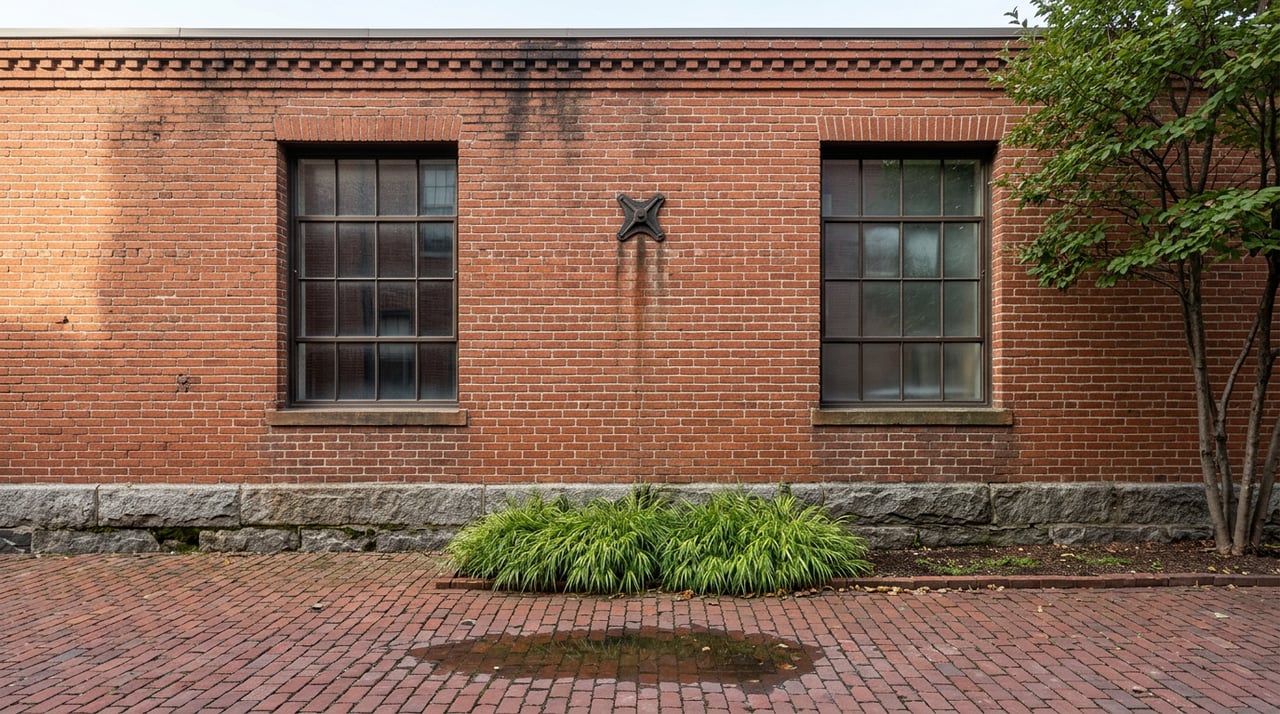
That growth is exactly why the inspection question matters here. One Western Massachusetts home inspector who has personally inspected condos at Eastworks and at similar conversions in Holyoke and downtown Northampton describes these buildings as carrying "massive shared envelopes" that are "dramatically more important than the unit interior." Brick or stone walls, original steel-frame windows, sawtooth or monitor roofs, and central HVAC distribution systems all belong to the building, not the buyer's unit, and a standard condo inspection that only walks through the four walls of the listed space never touches any of it. The same inspector notes that mill conversions are "some of the most interesting and complex inspections in the region," precisely because so much of what can go wrong lives outside the unit being sold.
Radon adds a second layer specific to these buildings. Ground-floor and basement-level units in mill conversions carry the same radon accumulation risk as a single-family basement, and testing is worth adding to any inspection on a lower-level unit rather than assuming a newer-feeling renovated space is automatically clear.
Two properties, two different questions to ask
| If you're buying an older single-family home on the outskirts | If you're buying a mill-conversion loft downtown |
|---|---|
| Confirm whether the property is on city sewer or private septic before you write an offer | Confirm the unit's floor level and ask about radon testing if it's ground floor or below |
| Ask for a current Title V inspection report, or confirm timing for a new one | Request the condo association's reserve fund status and any planned assessments for roof or window work |
| Budget negotiation room for septic repair if the system is older or undocumented | Ask your inspector whether they'll evaluate accessible common elements, not just the interior |
| Plan for a longer closing window if a new system needs engineering and permits | Understand that a clean unit inspection says nothing about the building's brick, windows, or roof |
What this means if you're close to acting
None of this is a reason to avoid either type of property. Easthampton's older neighborhoods and its mill district both offer something the other doesn't, and plenty of buyers land happily in each. The point is narrower than that. The generic inspection checklist that works in most towns assumes a kind of housing stock this city doesn't uniformly have. Knowing which category your target property falls into, before you're under contract, changes what you ask your inspector to look at and what you build into your timeline.
Sellers benefit from the same clarity. A homeowner on private septic who lists in spring and waits until an accepted offer to schedule Title V loses weeks they didn't need to lose. A condo owner at Eastworks or a similar building who can hand a buyer clean documentation on the association's reserves and recent envelope work removes an entire category of buyer hesitation before it starts.
Frequently asked questions
What happens if a septic system fails inspection during a sale? A failed system can complicate a sale. Full replacements commonly run from $10,000 to $50,000 or more depending on site conditions.
Does a mill-conversion condo need a different kind of inspection than a single-family home? The unit itself gets inspected the same way any condo would be. What's different is the value of also reviewing the building's shared systems, brick and window condition, roof structure, and central HVAC, along with the condo association's financial documents, since those elements sit outside what a standard unit walkthrough covers.
Buying or selling in Easthampton means knowing which of these two situations you're actually in before the inspection contingency clock starts running. If you want a read on a specific property, whether it's an older home on the edge of the city or a loft in one of the mill buildings, Shelly Hardy can walk through what matters for that address specifically. Schedule a free consultation to start with the right questions instead of a generic checklist.
This article is general information, not legal, tax or financial advice. Consult a qualified professional about your situation.