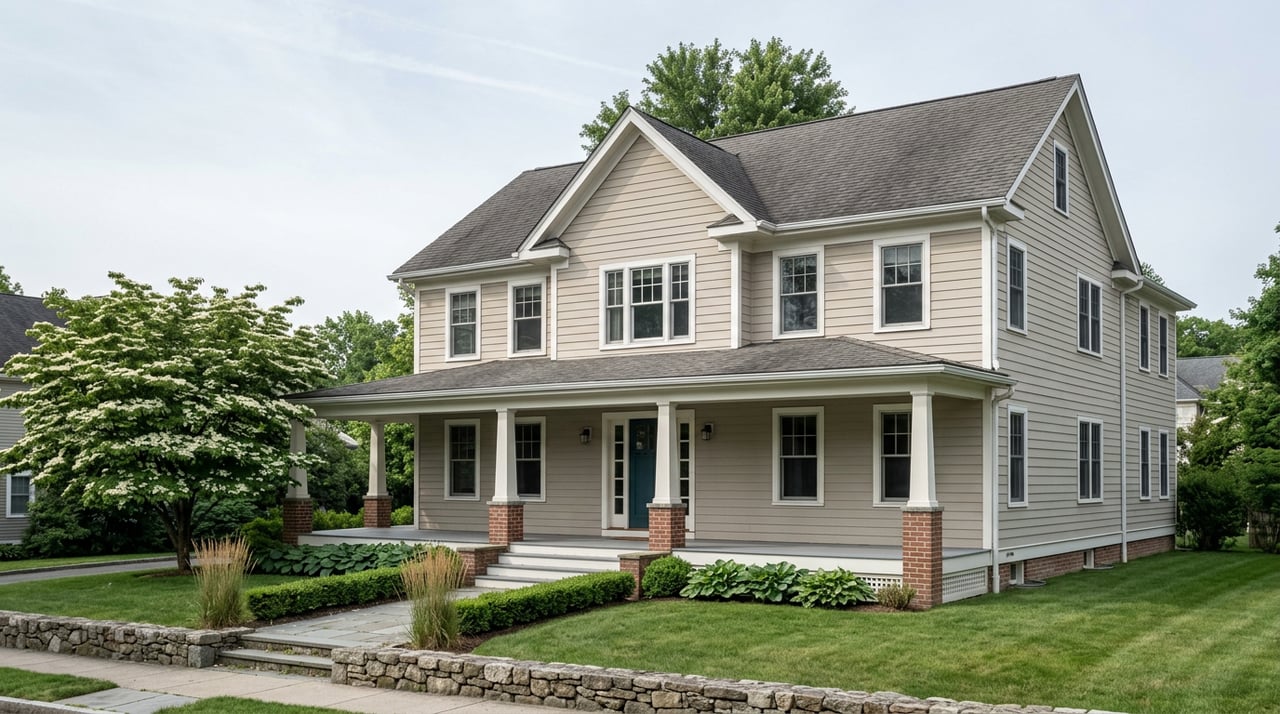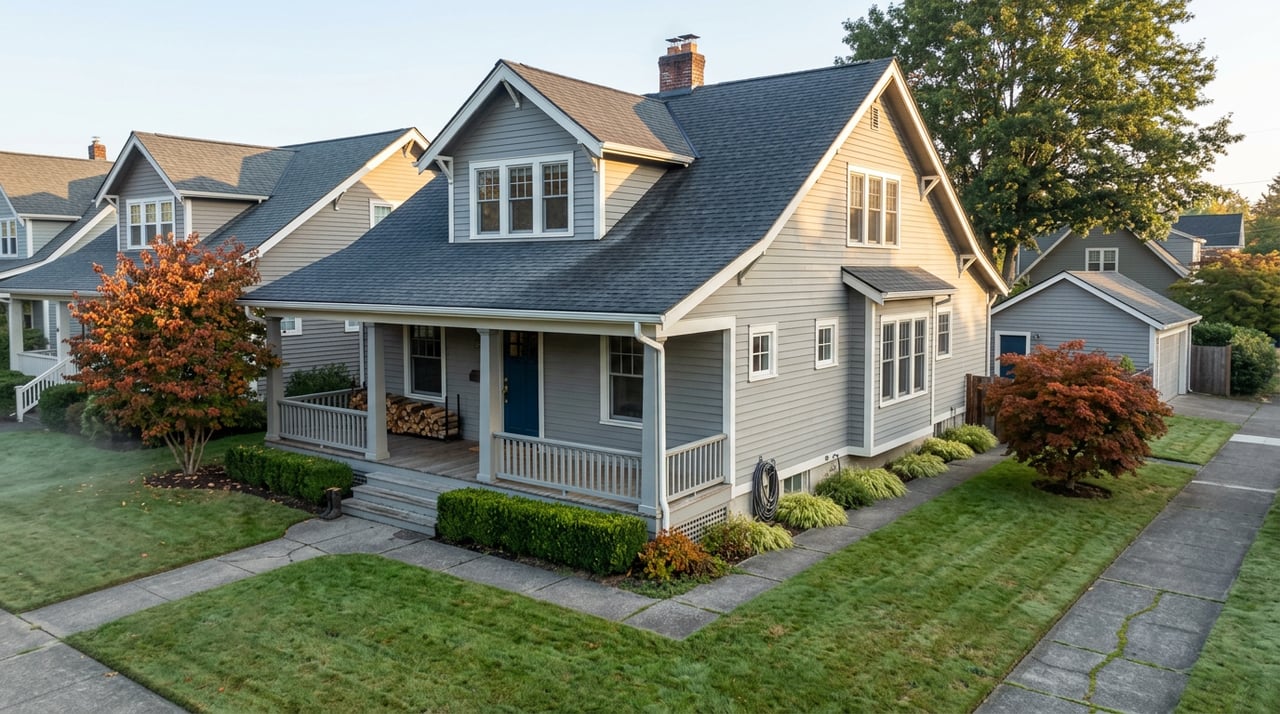
On September 4, a 1952 brick ranch on Vadnais Street in the Highlands went to highest and best by 5 p.m., with the seller responding the next day. Two bedrooms, an office that could pass for a third, built-in bookshelves, a faux fireplace, nothing unusual about the house itself. What was unusual, or would have been if you'd only read the citywide numbers, was the bidding.
Because if you'd Googled "Holyoke home prices" that same week, you'd have found headlines saying the opposite: prices down, days on market up, fewer homes selling than a year ago. Somebody walking into that Vadnais Street showing expecting leverage would have been in for a surprise.
The number everyone reads isn't the number the Highlands lives by
Holyoke's citywide figures, as tracked by Redfin, told a soft-market story through the first quarter of 2026. In February, the median sale price across the whole city was $289,000, down 11.2% from February a year earlier. Homes were taking a median of 50 days to sell, up from 46. Only 13 homes changed hands that month, down from 20 the year before.
Zillow's separate estimate muddies things further. Its home value index for Holyoke, which smooths for time and mix rather than tracking raw monthly sales, put the citywide average at $337,457 as of July 2026, up 4.1% for the year. Two respected sources, two different directions, same city, same rough window of time.
That disagreement is worth sitting with for a second, because it's a clue. When a citywide median can point down 11% on one platform and up 4% on another, the citywide number itself has stopped being a reliable compass. What it's actually doing is averaging together a handful of very different neighborhood stories and calling the blend "Holyoke."
The Highlands is one of the neighborhoods getting averaged away. And its own story looks nothing like the citywide one.
What the Highlands was actually doing
Redfin's neighborhood-level data for the Highlands, as of March 2026, showed a median sale price of $385,000, up 8.3% year over year. A separate market read on the same neighborhood page put the swing even sharper: an average house price up 29.6% for the year, a competitiveness score of 89 out of 100, homes going under contract in a median of 22 days, and hot listings selling for roughly 10% over asking price in about 13 days. That's not a market cooling off. That's a market where you show up prepared to move fast and pay near or above the number on the sign.
Here's how the picture looks side by side:
| Submarket | Period | Median Sale Price | Year-over-Year | Days to Sell |
|---|---|---|---|---|
| Holyoke, citywide | Feb 2026 | $289,000 | -11.2% | 50 |
| Highlands | Mar 2026 | $385,000 | +8.3% | — |
| Highlands (separate read) | Recent | $350,000 avg. | +29.6% | 22 |
| Downtown Holyoke | Jan 2026 | $237,000 | +51.1% | 61 |
| South Hadley Falls (trailing 3 mo.) | Through Mar 2026 | $292,000 | -21.0% | 21 |
Four neighborhoods inside one city, moving in four different directions in roughly the same stretch of time. That's not noise you can wave away. It's the actual texture of Holyoke's market, and it's exactly what a single citywide median is built to erase.
Small sample sizes lie louder than big ones
Before anyone treats every number in that table as gospel, it's worth explaining why some of these swings are more trustworthy than others.
Downtown Holyoke's reported 51.1% jump came from five sales in a single month, up from four the year before. One extra transaction, especially a higher-priced one, can swing a percentage that dramatically when the base is that small. That's not evidence of a downtown boom. It's evidence that five sales is too small a sample to build a headline on.
The Highlands numbers are a different animal. A 22-day median time on market, a 89-out-of-100 competitiveness score, and hot homes selling above list within two weeks aren't the kind of thing a single unusual sale can fake. Those are behavioral signals, pulled from enough transactions and enough buyer activity to describe a real pattern: people are actively competing for houses in this neighborhood, and they're competing on a timeline, not just a price.
That distinction matters if you're the one shopping. A citywide median telling you Holyoke prices are soft is true in the aggregate and nearly useless if the Highlands is where you're actually looking.
Why buyers keep circling back to the Highlands
None of this happened by accident. The Highlands sits northwest of downtown Holyoke, on higher ground, developed as a streetcar suburb in the 1880s and still carrying the Victorian housing stock from that era across roughly 400 acres of mostly residential streets, according to its Wikipedia entry. That combination of walkable blocks, older architectural character, and proximity to Kennedy Park has made it, for a long time, the section of Holyoke buyers name first when they're asked where they'd want to live in the city.
It also sits in a specific spot on the map that a lot of buyers are quietly optimizing for: close enough to Northampton and Easthampton to borrow their restaurants, shops, and job markets, without paying the premium those towns charge for housing. Quick access to I-91 makes that trade-off easy to act on daily. A listing for 116 Pleasant Street, a 1913 stucco colonial with 2,430 square feet and four bedrooms, marketed the neighborhood as "wonderfully walkable" in the same breath as the historic character, which is exactly the pitch that keeps working here.
What this means if you're bidding this fall
If you're watching the citywide headline and waiting for the Highlands to soften to match it, the data doesn't support that plan. A 22-day median time on market means a house you like on a Friday could be under contract before the following weekend. Multiple offers are common enough that going in at list price is treated as a starting position, not a guarantee.
Practically, that means arriving with financing already sorted, being ready to write a highest-and-best offer with a short fuse, similar to the Friday-deadline structure on Vadnais Street, and treating the days-on-market clock as something closer to two weeks than the seven weeks the citywide median implies. It also means the "buyer's market" framing that fits parts of Holyoke right now doesn't transfer cleanly to this specific neighborhood, and it's worth having that conversation before you fall for a house and lose it to someone who did the homework first.
The investor angle: a rent gap the median doesn't show
For anyone weighing a duplex or triplex rather than a single family, there's a second number worth knowing. Recent city-to-city rent comparisons put Holyoke's median gross rent at $908, compared with $1,254 in Northampton, a gap of roughly 38%, according to Towncharts' housing data. Separately, average rents across Holyoke have been tracked around $1,227 a month recently, still well under the national average of $1,664.
That gap is the whole case for buying a rental in the Highlands instead of across the river. Acquisition costs sit below Northampton's, but tenants renting in the Highlands are close enough to Northampton's job base, Holyoke Community College, and Holyoke Medical Center that rents don't need a Northampton address to hold up. A recent listing for a turnkey two-family in the Highlands, updated in 2018 with new kitchens, baths, and a roof, with separate utilities and independent entrances on each floor, is the kind of property built for exactly that math. A three-bedroom unit on Waldo Street in the same neighborhood was listed at $1,700 a month, well above the citywide median rent, which tells you the Highlands premium shows up in rent rolls as much as it does in sale prices.
None of that shows up if you only glance at the citywide median gross rent and stop there. It only shows up when you look at what a specific Highlands address is actually renting for.
Frequently asked questions
If Holyoke's citywide prices are down, does that mean I have negotiating room in the Highlands? Not based on the data above. The Highlands is behaving like a tight, competitive submarket even while the citywide median points the other way. Go in prepared to compete, not to negotiate from a position of citywide softness.
Is the Highlands still cheaper than buying in Northampton? The listings and rent data both suggest yes. The neighborhood has functioned for years as a way to live near Northampton's amenities and job market without paying Northampton's premium, and the current rent gap between Holyoke and Northampton supports that same trade-off for investors.
Why did Downtown Holyoke's price jump so much more than the Highlands, if the Highlands is the stronger market? Volume. Downtown Holyoke's 51.1% jump came from just five sales in a month, a small enough sample that one or two pricier closings can swing the percentage. The Highlands' numbers are built on a broader, steadier pattern of quick sales and competitive bidding, which makes them a more reliable read on where that specific market actually stands.
If you're weighing a house or a small multi-family in the Highlands and want a read on what's really happening on a specific street, that's the kind of conversation worth having before you write an offer, not after you lose one. Shelly Hardy has spent more than a decade tracking exactly these neighborhood-level shifts across the Pioneer Valley. Schedule a free consultation to talk through what the Highlands market looks like for your specific plans.